
Resistance Tube Workout PDF: A Comprehensive Guide
Discover effective resistance tube workouts readily available as PDFs, offering convenient fitness solutions for home or gym use, enhancing muscle strength and flexibility.
Resistance tube training presents a versatile and accessible approach to fitness, gaining popularity as a convenient alternative to traditional weights. Numerous resources, often available as downloadable PDF workout guides, detail effective exercises for all fitness levels. These guides cater to individuals seeking home workouts or supplemental training at the gym.
The core principle involves utilizing the elastic resistance of tubes to challenge muscles through a full range of motion. This method is lauded for its portability, affordability, and adaptability. PDF resources often include detailed instructions, visual demonstrations, and progressive workout plans, making it easy to begin and track progress. Exploring these PDFs unlocks a pathway to improved strength, flexibility, and overall well-being.
What are Resistance Tubes?
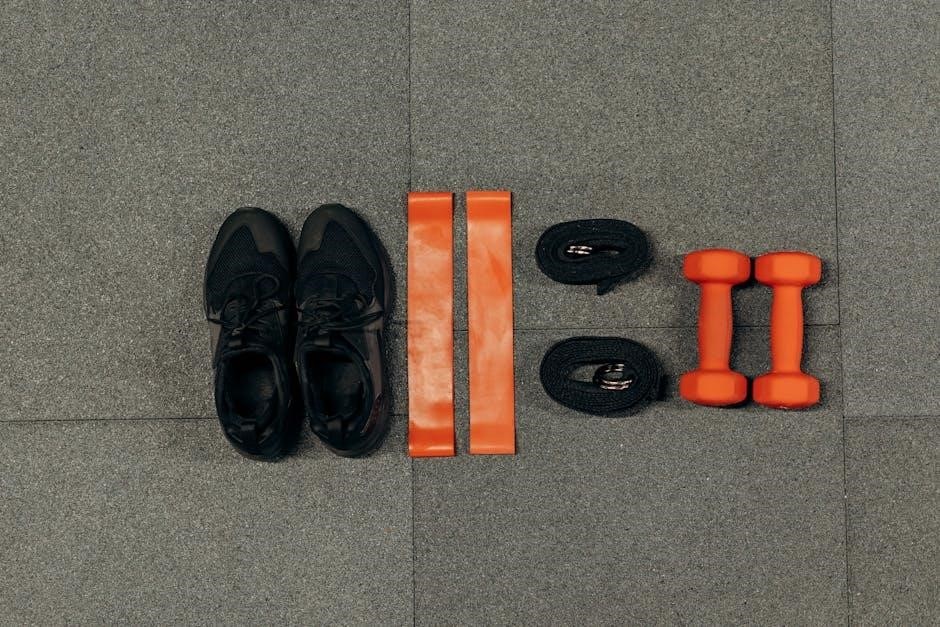
Resistance tubes, also known as exercise bands or therapy bands, are elastic bands used to build strength and improve mobility. Often featured in downloadable PDF workout plans, they provide variable resistance by stretching. These tubes are typically made from latex or rubber and come in varying resistance levels, indicated by color-coding.
Unlike free weights, resistance tubes offer constant tension throughout the entire range of motion, engaging muscles differently. Many PDF guides detail how to anchor the tubes for diverse exercises targeting various muscle groups. Their lightweight and portable nature makes them ideal for travel or home workouts. Finding a comprehensive PDF will explain the different types and how to safely incorporate them into your fitness routine.
Benefits of Resistance Tube Workouts
Resistance tube workouts, often detailed in accessible PDF guides, offer a multitude of advantages. They’re incredibly versatile, suitable for all fitness levels, and can be easily modified. A key benefit is improved muscular endurance and strength, achieved through consistent tension. Many PDF plans emphasize building connective tissue strength, reducing injury risk – crucial for runners, as highlighted in some resources.
Portability is a major plus; tubes are lightweight and ideal for travel. PDF workouts often require minimal space, making home fitness convenient. They’re also cost-effective compared to gym memberships or expensive equipment. Properly utilized, as demonstrated in a good PDF, resistance tubes can enhance flexibility, posture, and overall functional fitness.
Resistance Tube Workout vs. Free Weights
Comparing resistance tube workouts – often found in convenient PDF formats – to free weights reveals distinct advantages and disadvantages. Free weights provide consistent resistance throughout a range of motion, while tubes offer variable resistance, increasing as they stretch. Many PDF guides demonstrate how to mimic free weight exercises with tubes.
Tubes are generally more affordable and portable, ideal for home or travel fitness, as detailed in numerous PDF plans. Free weights excel in building maximal strength, but tubes are excellent for muscular endurance and rehabilitation. Some resources suggest tubes are gentler on joints. A well-structured PDF can help users achieve similar results, focusing on proper form and progressive overload.
Choosing the Right Resistance Tubes
Selecting appropriate resistance tubes, often detailed in PDF workout guides, is crucial for safety and effectiveness; consider your fitness level and goals.
Types of Resistance Tubes Available
Resistance tubes come in diverse forms, each suited for varied workout intensities and preferences. PDF workout resources often categorize them clearly; You’ll find looped resistance bands – versatile for lower body and some upper body exercises, providing consistent tension. Tube resistance bands with handles are excellent for targeted muscle isolation, frequently featured in detailed PDF plans.

Flat resistance bands, wider and flatter, are ideal for mobility work and rehabilitation exercises, often included in specialized PDF guides. Finally, figure-8 resistance bands are useful for rotational movements and adding challenge to exercises. Many PDF workout downloads will specify which type is best for each exercise, ensuring proper form and maximizing results. Understanding these distinctions, often outlined in a comprehensive PDF, is key to a safe and effective workout.
Resistance Levels: How to Choose
Selecting the appropriate resistance level is crucial for maximizing workout benefits and preventing injury. Most resistance tube sets, detailed in accompanying PDF guides, are color-coded, indicating varying levels of resistance – from extra light to extra heavy. Beginners should start with lighter resistance, focusing on proper form as demonstrated in PDF exercise illustrations.
As strength increases, gradually progress to higher resistance levels. A good rule of thumb, often explained in PDF workout plans, is to choose a resistance where you can complete 10-15 repetitions with good form; PDF resources frequently include charts mapping resistance levels to specific exercises and fitness goals. Don’t hesitate to consult a PDF’s recommendations or a fitness professional for personalized guidance.
Factors to Consider When Purchasing
When investing in resistance tubes, consider the quality of the latex – durable, 100% natural latex is preferable, often highlighted in PDF product reviews. Look for sets including door anchors and handles for exercise versatility, features frequently detailed in PDF guides.
Evaluate the included PDF workout materials; comprehensive plans with clear illustrations are invaluable. Check for varying resistance levels to accommodate progression. Read customer reviews, often summarized in PDF comparisons, regarding tube longevity and resistance accuracy.

Portability is a key benefit, so consider a set with a carrying case. Finally, compare prices across different retailers, but prioritize quality and included resources over solely the lowest cost, as detailed in PDF buying guides.

Full Body Resistance Tube Workout Plan
Explore detailed PDF workout plans targeting all muscle groups using resistance tubes, offering structured routines for effective, full-body fitness at your convenience.
Warm-up Exercises (5-10 minutes)
Prioritize a thorough warm-up before any resistance tube workout to prepare muscles and joints, minimizing injury risk. Begin with 5-10 minutes of light cardio, like marching or jogging in place.
Incorporate dynamic stretches utilizing the resistance tubes themselves. Tube arm circles, leg swings with gentle resistance, and torso twists are excellent choices. These movements increase blood flow and range of motion.
Focus on controlled movements, avoiding bouncing or jerky motions. The warm-up should gradually increase your heart rate and prepare your body for the more intense exercises to follow. A proper warm-up significantly enhances workout effectiveness and safety, as detailed in many PDF workout guides.
Dynamic Stretching with Resistance Tubes
Enhance your warm-up with dynamic stretches using resistance tubes for improved flexibility and muscle activation. Perform tube pull-aparts to open the chest and strengthen the upper back.
Execute resisted leg swings – attach a tube to your ankle and swing forward, backward, and sideways, focusing on controlled movements. Tube torso twists, holding the tube across your chest, engage your core and improve rotational mobility.
Remember to maintain proper form and avoid overextending. These stretches, often detailed in PDF workout plans, prepare your muscles for the demands of the full-body resistance tube routine, maximizing performance and minimizing the risk of strains or injuries.
Upper Body Exercises
Target your arms, chest, and shoulders with a variety of resistance tube exercises. For bicep curls, stand on the tube and curl upwards, maintaining controlled resistance. Tricep extensions involve anchoring the tube overhead and extending your arms downwards.
Chest presses can be performed by anchoring the tube behind you and pressing forward, mimicking a dumbbell press. Shoulder presses utilize a similar anchoring point, pressing the tube upwards.
Many resistance tube PDF workout guides detail sets, reps, and proper form for each exercise. Remember to adjust tube resistance to match your fitness level, ensuring a challenging yet safe workout for optimal upper body development.
Bicep Curls with Resistance Tube
Perform resistance tube bicep curls by securely standing on the middle of the tube with both feet, shoulder-width apart. Grip the handles with palms facing upwards, keeping elbows close to your body. Slowly curl the handles towards your shoulders, focusing on contracting your biceps throughout the movement.
Resistance tube workout PDFs often recommend 3 sets of 10-15 repetitions. Maintain a controlled descent, resisting the pull of the tube. Ensure a stable core and avoid swinging your body to generate momentum.
Adjust the resistance by choking up or down on the tube handles. Proper form is crucial to prevent injury and maximize bicep engagement, as detailed in most comprehensive workout guides.
Tricep Extensions with Resistance Tube
Execute tricep extensions by anchoring the resistance tube securely overhead – perhaps under a sturdy doorframe or using a door anchor. Grip the tube handle with an overhand grip, extending your arm straight up towards the ceiling. Keeping your elbow close to your head, slowly extend your forearm, focusing on contracting your triceps.
Resistance tube workout PDFs typically suggest 3 sets of 12-15 repetitions. Control the descent, resisting the tube’s pull. Avoid locking your elbow at the top of the movement.
Modify the difficulty by adjusting your grip or the tube’s resistance level. Maintaining proper form, as illustrated in many guides, is vital for effective tricep isolation and injury prevention.
Chest Press with Resistance Tube
Perform the chest press by securing the resistance tube behind your back, anchoring it under your feet or wrapping it around a stable object. Grip the handles with palms facing forward, elbows bent at 90 degrees. Push the handles forward, extending your arms straight out in front of your chest, simulating a dumbbell press.
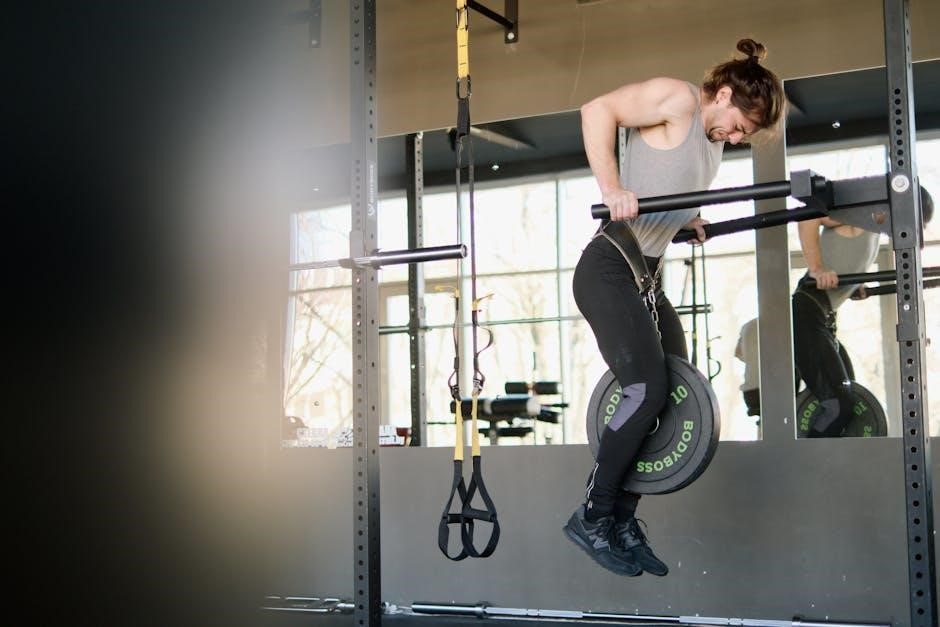
Resistance tube workout PDFs often recommend 3 sets of 10-12 repetitions. Squeeze your chest muscles at the peak of the contraction and slowly return to the starting position.
Adjust the resistance by changing the tube’s tension or your hand position. Proper form, detailed in many downloadable guides, ensures effective chest engagement and minimizes strain.
Shoulder Press with Resistance Tube
Execute the shoulder press by standing on the resistance tube, holding the handles at shoulder height with palms facing forward. Ensure a stable stance and engage your core for balance. Press the handles upwards, extending your arms overhead until they are nearly straight, focusing on controlled movement.
Resistance tube workout PDFs typically suggest 3 sets of 10-15 repetitions. Lower the handles back to the starting position slowly, maintaining tension throughout the exercise.
Modify the difficulty by adjusting the tube’s resistance or altering your grip. Many online resources emphasize proper form to prevent shoulder impingement and maximize muscle activation.
Lower Body Exercises
Resistance tube workout PDFs frequently incorporate lower body exercises to build strength and endurance. Squats with a tube looped under your feet and around your upper back effectively target the glutes and thighs. Lunges, performed similarly, enhance leg muscle definition and balance.
Glute bridges, utilizing the tube around the thighs, isolate and strengthen the gluteal muscles. These exercises are often presented with detailed illustrations within the PDFs, emphasizing proper form to avoid injury.
Many guides recommend 3 sets of 12-15 repetitions for each exercise, adjusting resistance based on fitness level. Focus on controlled movements and maintaining core engagement throughout each set.
Squats with Resistance Tube
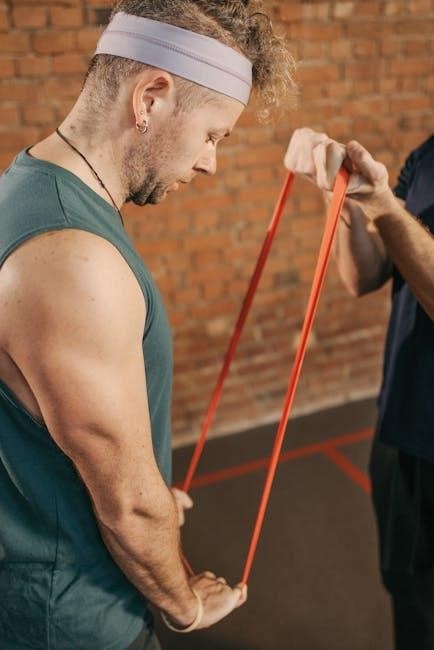
Resistance tube workout PDFs consistently feature squats as a foundational lower body exercise. To perform, position the tube under both feet, holding the ends securely with your hands at shoulder height. Maintain a straight back and core engagement as you lower into a squatting position, keeping your knees aligned with your toes.
The tube provides increasing resistance as you ascend, challenging your glutes, quads, and hamstrings. Many PDFs illustrate proper form, emphasizing a controlled descent and explosive upward movement.
Aim for 3 sets of 12-15 repetitions, adjusting tube resistance to match your fitness level. Focus on feeling the burn in your leg muscles and maintaining a stable core throughout the exercise.
Lunges with Resistance Tube
Lunges with resistance tubes, detailed in numerous workout PDFs, are excellent for building lower body strength and improving balance. Secure the tube under your front foot, holding the ends in each hand at shoulder height. Step forward into a lunge, ensuring your front knee doesn’t extend past your toes.
Maintain a straight back and engaged core throughout the movement. The resistance tube adds intensity, challenging your quads, glutes, and hamstrings with each repetition. PDFs often demonstrate variations, like reverse lunges or walking lunges.
Complete 3 sets of 10-12 lunges per leg, adjusting the tube’s resistance to suit your fitness level. Prioritize controlled movements and proper form to maximize effectiveness and prevent injury.
Glute Bridges with Resistance Tube
Glute bridges with a resistance tube, frequently featured in resistance tube workout PDFs, effectively target the glutes and hamstrings. Position the tube just above your knees, holding the ends in your hands. Lie on your back with knees bent and feet flat on the floor.
Engage your core and glutes, lifting your hips off the ground while pressing your knees outward against the tube’s resistance. Squeeze your glutes at the top of the movement, maintaining a straight line from shoulders to knees.
Complete 3 sets of 15-20 repetitions, focusing on controlled movements. PDFs often suggest variations, like single-leg glute bridges for increased difficulty.
Core Exercises
Resistance tube core exercises, detailed in many workout PDFs, are crucial for overall stability and strength. These exercises effectively engage abdominal muscles and obliques, complementing upper and lower body routines. Common exercises include resistance tube Russian twists and plank variations.
Russian twists involve sitting with knees bent, leaning back slightly, and rotating your torso while pulling against the tube’s resistance. Plank variations, like side planks with a tube around the ankles, add intensity and challenge.
PDFs typically recommend 3 sets of 15-20 repetitions for each exercise, emphasizing proper form to maximize effectiveness and prevent injury.
Resistance Tube Russian Twists
Resistance tube Russian twists, frequently featured in workout PDFs, are a dynamic core exercise targeting obliques and abdominal muscles. Secure the tube around your feet or a stable object. Sit with knees bent, feet slightly elevated, and lean back maintaining a straight spine.
Grip the tube with both hands and twist your torso from side to side, pulling against the resistance. Focus on controlled movements, engaging your core throughout the exercise. Many PDFs suggest 3 sets of 15-20 repetitions per side.
Proper form is vital; avoid rounding your back and maintain a steady pace for optimal results.
Resistance Tube Plank Variations
Resistance tube plank variations, commonly detailed in workout PDFs, elevate traditional planks by adding instability and increased core engagement. Loop a tube around your feet and hold the ends in your hands while in a plank position; This adds resistance to anti-rotation.
Alternatively, place the tube across your upper back, securing it under your hands, to challenge shoulder stability. PDFs often include side plank variations with the tube around the ankles, intensifying oblique work.
Maintain a straight line from head to heels, avoiding hip sagging. Aim for 3 sets, holding each variation for 30-60 seconds, as suggested in many guides.

Safety Considerations & Proper Form
Prioritize correct form and tube inspection before each session, as detailed in workout PDFs, to prevent injuries and maximize exercise effectiveness and safety.
Proper Form Techniques
Maintaining proper form is paramount when utilizing resistance tubes, and detailed PDFs often emphasize this. Begin each exercise with a controlled movement, focusing on engaging the targeted muscle group. Avoid jerky motions or using momentum to complete repetitions; instead, concentrate on a slow, deliberate pace.
Ensure the tube is securely anchored, and your grip is firm throughout the exercise. Keep your core engaged to stabilize your body and prevent unwanted movement. Many workout PDFs include visual demonstrations or step-by-step instructions to guide you. Pay close attention to spinal alignment, keeping your back straight and avoiding excessive twisting.
Proper form not only maximizes the effectiveness of the exercise but also significantly reduces the risk of injury. If you’re unsure about the correct technique, consult a fitness professional or refer to a reputable resistance tube workout PDF for clarification;
Avoiding Common Injuries
Resistance tube workouts, while generally safe, can lead to injuries if precautions aren’t taken. A comprehensive PDF guide will often highlight potential risks. Shoulder impingement is common with improper shoulder presses; maintain a natural range of motion. Wrist strain can occur during bicep curls – keep wrists firm and avoid excessive bending.
Overextension of joints is another risk; control the tube’s recoil. Always warm up before exercising and cool down afterward to prepare muscles and improve flexibility. Inspect tubes for cracks or wear before each use, as breakage can cause snapping injuries.
Listen to your body; stop if you feel pain; Many PDFs suggest starting with lower resistance levels and gradually increasing them as strength improves, minimizing strain and preventing overuse injuries.
Resistance Tube Safety Tips
A quality resistance tube workout PDF will emphasize safety. Always anchor tubes securely to a stable object – a door anchor is useful, but ensure the door closes towards the anchor. Regularly inspect tubes for cracks, tears, or wear, discarding damaged ones immediately to prevent snapping during exercise.
Wear appropriate footwear and clothing, avoiding loose items that could get caught. Maintain a controlled range of motion throughout each exercise, avoiding jerky movements. Never stretch a tube beyond its recommended length, as this increases the risk of breakage.
Be mindful of your surroundings, ensuring sufficient space to move freely. If a tube snaps, it can recoil with force; protect your face and eyes. A good PDF will illustrate proper form to minimize risk.

Finding Resistance Tube Workout PDFs
Explore reliable fitness websites and online resources to locate comprehensive resistance tube workout PDFs, tailoring plans to your fitness level and goals easily.
Reliable Sources for Workout Plans
Numerous online platforms offer expertly designed resistance tube workout PDFs. Fitness websites specializing in home workouts frequently provide downloadable plans catering to various fitness levels – beginner, intermediate, and advanced. Look for resources from certified personal trainers or physical therapists to ensure safety and effectiveness.

Reputable health and wellness blogs often feature detailed workout routines with accompanying PDF guides. YouTube channels dedicated to fitness also frequently link to downloadable workout plans in their video descriptions. Be cautious and verify the credentials of the source before following any workout regimen. Prioritize PDFs that include clear instructions, visual demonstrations, and modifications for different fitness abilities. Remember to always consult your doctor before starting any new exercise program.
What to Look for in a PDF Workout
A quality resistance tube workout PDF should prioritize clarity and safety. Look for detailed exercise instructions, including proper form cues and common mistakes to avoid. Visual aids, such as images or diagrams, are crucial for understanding correct technique. The PDF should clearly specify the resistance level of the tubes needed for each exercise.
Effective plans will incorporate a warm-up and cool-down section, alongside a balanced routine targeting all major muscle groups. Pay attention to the workout’s structure – sets, repetitions, and rest periods should be clearly defined. Bonus features like progression guidelines (how to increase intensity over time) and modification options are highly valuable. Ensure the PDF is well-organized and easy to navigate for a seamless workout experience;
Customizing Your Workout Plan
While pre-made resistance tube workout PDFs are excellent starting points, tailoring the plan to your individual needs is key. Consider your current fitness level and any physical limitations. Don’t hesitate to modify exercises or reduce the number of repetitions if needed. Gradually increase resistance or sets as you get stronger.
To personalize further, incorporate exercises that address your specific goals – whether it’s building strength, improving endurance, or enhancing flexibility. You can also swap out exercises you dislike for similar movements. Remember to listen to your body and prioritize proper form over intensity. Regularly reassess your progress and adjust the plan accordingly to ensure continued challenge and results.