
Suzuki Viola Book 1 Piano Accompaniment PDF: A Comprehensive Guide
This guide explores the Suzuki Viola School, Volume 1, focusing on the readily available piano accompaniment in PDF format. It details resources, legality, and effective usage.
Understanding the Suzuki Viola School
The Suzuki Viola School, like its counterparts for violin and cello, is a globally recognized method for learning the viola. Developed by Shinichi Suzuki, it emphasizes learning by ear, mimicking speech acquisition, and fostering a supportive learning environment.
Volume 1 introduces foundational techniques and a carefully sequenced repertoire. Crucially, the method isn’t solely about the viola part; the piano accompaniment is integral. It provides harmonic support, rhythmic stability, and a model for intonation.
The school’s philosophy centers on talent education, believing all children possess potential. The accompanying materials, including the PDF piano accompaniment, are designed to nurture this potential through consistent practice and positive reinforcement. Resources like those from Alfred Music are key.
What is the Suzuki Method?
The Suzuki Method, or Talent Education, is a revolutionary approach to music instruction founded on the belief that musical ability can be developed in any child. It mirrors language acquisition – students learn by listening and imitating, starting with simple pieces.

Central to this method is the piano accompaniment, acting as a crucial learning tool. It provides a solid harmonic foundation and serves as a model for correct intonation and rhythm. The Suzuki Viola Book 1 piano accompaniment PDF facilitates this process.
Recordings, like those by William and Doris Preucil, are essential, and the method emphasizes a triangle of student, teacher, and parent. This collaborative approach, combined with the carefully chosen repertoire, fosters a love of music and builds technical proficiency.
The Importance of Piano Accompaniment
Piano accompaniment is integral to the Suzuki Viola School, particularly Book 1. It’s far more than just background music; it actively shapes the student’s musical development. The Suzuki Viola Book 1 Piano Accompaniment PDF provides access to this vital resource.
The accompaniment establishes a secure harmonic context, aiding intonation and rhythmic accuracy. Students internalize musical phrasing and style by listening to the piano’s interpretation. It also allows the teacher to focus on the student’s technique and musicality.
Furthermore, the piano part often mirrors or complements the viola line, creating a rich and engaging musical experience. Performances by Doris Preucil exemplify the supportive role of the piano.

Availability of the Suzuki Viola Book 1 Piano Accompaniment PDF
The Suzuki Viola Book 1 Piano Accompaniment PDF is available for purchase from official sources like Alfred Music and Amazon, ensuring legal access.
Official Sources for Purchase
Securing the Suzuki Viola Book 1 Piano Accompaniment PDF through official channels guarantees authenticity and supports the creators. Alfred Music is a primary source, offering the accompaniment as part of the complete Suzuki Viola School, Volume A (containing Volumes 1 & 2).
Amazon.com also provides convenient access, listing the piano accompaniment separately and bundled with the viola part. Purchasing from these reputable vendors ensures you receive a legitimate copy, avoiding potential copyright issues associated with unauthorized downloads.
These sources typically offer both physical copies and digital PDF downloads, catering to different preferences. Checking both Alfred Music’s website and Amazon will reveal current pricing and availability.
Legality and Copyright Considerations
Downloading the Suzuki Viola Book 1 Piano Accompaniment PDF from unofficial sources carries significant legal and ethical implications. Copyright law protects the intellectual property of Alfred Music and Shinichi Suzuki’s method.
Unauthorized distribution or reproduction of copyrighted material is illegal and can result in penalties. Supporting official purchases ensures composers, publishers, and educators are fairly compensated for their work.
Using illegally obtained PDFs undermines the Suzuki Method’s integrity and sustainability. Always prioritize legitimate sources to respect copyright and contribute to the continued development of quality educational materials for viola students.
Free Online Resources (Cautionary Note)
While searching for a free Suzuki Viola Book 1 Piano Accompaniment PDF, exercise extreme caution. Numerous websites offer downloadable sheet music, but many host illegally copied materials, posing risks. These sites often contain malware, viruses, or inaccurate transcriptions.
Downloading from unverified sources compromises your device’s security and potentially violates copyright laws. The quality of free PDFs is often substandard, hindering effective learning. Prioritize purchasing from official vendors like Alfred Music or authorized retailers.
Remember, supporting legitimate sources ensures the continued availability of accurate and high-quality educational resources for viola students and teachers.
Content and Structure of the Book
Volume 1 features core repertoire for beginning viola students, complemented by a dedicated piano accompaniment. It aligns with Suzuki violin and cello methods.
Volume 1: Core Repertoire
Suzuki Viola School, Volume 1, introduces foundational pieces carefully sequenced for developing technique and musicality. The repertoire includes well-known tunes and exercises designed to build a solid base. Many solos share keys with the Suzuki Cello School, offering collaborative opportunities.
Students progress through pieces that emphasize intonation, tone production, and rhythmic accuracy. The accompanying piano part isn’t merely supportive; it actively shapes the musical phrasing and provides harmonic context. This volume lays the groundwork for more advanced studies, preparing students for subsequent levels within the Suzuki method. The material is designed for use with the companion recording, enhancing the learning experience.
Key Features of the Piano Accompaniment
The piano accompaniment for Suzuki Viola Book 1 is integral to the learning process, offering more than just harmonic support. It provides a model for phrasing, dynamics, and stylistic interpretation, guiding the student’s musical development. Doris Preucil’s performance alongside William Preucil Sr.’s viola demonstrates this collaborative approach.
The accompaniment actively participates in establishing a strong rhythmic foundation and reinforces correct intonation. It’s designed to be musically engaging, enriching the overall experience. Availability in PDF format allows easy access for practice and performance preparation. The piano part is thoughtfully crafted to complement the viola line, fostering a beautiful musical dialogue.
Relationship to Suzuki Violin and Cello Schools
Suzuki Viola School, Volume 1, intentionally shares repertoire with both the Suzuki Violin and Cello Schools, creating valuable opportunities for ensemble playing and cross-instrumental understanding. Many solos are written in keys common to the cello school, while some pieces directly correspond with violin compositions.
This interconnectedness fosters a collaborative learning environment and broadens the musical horizons of students. The piano accompaniment PDF supports this integration, providing a consistent musical framework across instruments. This shared foundation simplifies combined performances and encourages musical dialogue between viola, violin, and cello players, enriching their overall musical experience.
Performers and Recordings
Notable performers include William and Doris Preucil, and Koji Toyoda, offering recordings of the Suzuki Viola School, Volume 1, with accompanying piano tracks.
William Preucil Sr. and Doris Preucil
William Preucil Sr. is a highly respected figure in the Suzuki method, renowned for his performances and contributions to viola education. He performs the viola parts on the Suzuki Viola School, Volume 1 recording, providing a benchmark interpretation for students.
Doris Preucil expertly provides the piano accompaniment for this volume, beautifully supporting the viola line and demonstrating the crucial role of the pianist in the Suzuki approach. Their collaborative recording, available as part of the Alfred Music International Edition, is considered essential for learning and teaching.
The Preucils’ work embodies the Suzuki philosophy of learning by ear and immersion, offering a model for students to emulate and a valuable resource for educators.
Koji Toyoda’s Recordings
Koji Toyoda is a prominent violinist and pedagogue deeply involved with the Suzuki method, and his recordings extend to accompanying materials for various Suzuki instrument volumes. While primarily known for his violin recordings (Volumes 4-8), his influence impacts the understanding of stylistic interpretation across the Suzuki repertoire.
Though not directly performing the piano accompaniment for Suzuki Viola Book 1, Toyoda’s recordings of corresponding pieces in the Violin and Cello schools offer valuable comparative insights. Students and teachers can draw connections between the repertoire across instruments, enriching their musical understanding.
His performances exemplify the Suzuki emphasis on beautiful tone and expressive phrasing, providing a model for nuanced musicality.
David Cerone and David Nadien Performances
David Cerone and David Nadien are both respected violinists who have contributed significantly to Suzuki literature through their performance recordings. Specifically, they’ve released recordings of the Suzuki Violin School, encompassing Volumes 1-4 in cassette and CD formats.
While their recordings focus on the violin, they offer valuable interpretive models applicable to the viola repertoire, particularly given the shared musical material between the Suzuki Violin and Viola schools. Teachers can use these recordings to illustrate phrasing and stylistic nuances.
These performances provide students with inspiring examples of musicality, enhancing their understanding of the Suzuki pedagogical approach.
Using the Accompaniment Effectively
The piano accompaniment supports student development by providing accurate tempo, dynamics, and a secure harmonic foundation. It’s crucial for integrated viola lessons.
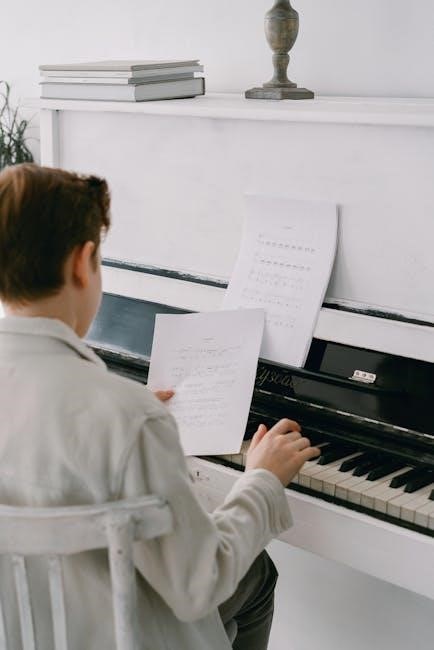
Tempo and Dynamics
Careful attention to tempo and dynamics is paramount when utilizing the Suzuki Viola Book 1 piano accompaniment PDF. The accompaniment isn’t merely supportive; it actively shapes the musical phrasing and expression.
Students benefit from observing how the pianist interprets dynamic markings, learning to match and respond accordingly. The piano part often subtly indicates phrasing, guiding the viola student towards a more nuanced performance.
Maintaining a consistent, yet flexible, tempo is vital, especially for beginners. The pianist should avoid rushing or dragging, providing a stable rhythmic foundation. Dynamic contrast, ranging from delicate piano passages to more robust forte sections, enhances musicality and encourages expressive playing.
Supporting the Student’s Development
The Suzuki Viola Book 1 piano accompaniment PDF plays a crucial role in supporting a student’s musical growth. It provides a model for intonation, rhythm, and musical expression, fostering a strong foundation.
The pianist’s sensitive playing encourages the student to listen critically and refine their own sound. By mirroring the intended phrasing and dynamics, the accompaniment helps internalize musical concepts.
This collaborative approach builds confidence and encourages a deeper understanding of the music. The piano part isn’t just background; it’s an active partner in the learning process, guiding and inspiring the young violist.
Integrating with Viola Lessons
Effectively integrating the Suzuki Viola Book 1 piano accompaniment PDF into lessons requires careful planning. Teachers should utilize it not just for performance practice, but also for ear training and musicality development.
The accompaniment allows for focused work on specific passages, isolating challenges in rhythm or intonation. It’s beneficial to occasionally have students play with the recording, then without, assessing their independence.
Furthermore, the piano part can be used to demonstrate phrasing and dynamics, prompting students to emulate the musical expression. Regularly incorporating the accompaniment enhances the overall learning experience.
Additional Resources for Viola Students
Supplementing the Suzuki method, explore scale studies by Mogill & Hrimaly, intermediate sheet music, and resources for learning viola positions.
Scale Studies (Mogill & Hrimaly)
Alongside the Suzuki Viola Book 1 and its piano accompaniment, dedicated scale studies are invaluable for technical development. Mogill’s and Hrimaly’s scale studies provide systematic practice, building intonation, finger dexterity, and bow control. These resources complement the repertoire, reinforcing fundamental skills.
Hrimaly’s studies, originally for violin, are readily adaptable for viola, offering a comprehensive approach to scale mastery; Mogill’s specifically designed viola scale studies provide targeted exercises. Consistent scale practice enhances a student’s ability to navigate the pieces in the Suzuki book with greater confidence and musicality, solidifying their foundational technique.
Intermediate Viola Sheet Music
As students progress beyond the Suzuki Viola Book 1, exploring intermediate sheet music expands their repertoire and challenges their growing skills. Numerous resources offer pieces suitable for transitioning players, building upon the foundation established by the Suzuki method.
Collections featuring classical excerpts, folk tunes, and original compositions provide diverse musical experiences. Focus on pieces that reinforce techniques learned in Book 1 – shifting, vibrato, and varied bowings. Selecting music slightly above the current level encourages growth, while maintaining accessibility. This continued exploration fosters musicality and a lifelong love of the viola.
Introducing the Positions for Viola (Volume 1)
While Suzuki Viola Book 1 primarily focuses on first position, preparing for subsequent volumes necessitates an early introduction to shifting. Resources like “Introducing the Positions for Viola, Volume 1” (Rubank Educational Library) offer a structured approach to third and half positions.
This supplemental material complements the Suzuki method, providing exercises to develop secure finger placement and smooth transitions. Gradual introduction, coupled with attentive listening and careful technique, is crucial. The piano accompaniment aids in intonation and rhythmic accuracy during position shifts, building confidence and musicality.

Suzuki Method Core Materials for Other Instruments
The Suzuki approach extends beyond viola, encompassing piano, violin, cello, string bass, flute, harp, guitar, and recorder, offering a consistent pedagogical framework.
Viola, Violin, Cello, String Bass
The Suzuki method’s core strength lies in its comprehensive application across the string family. Materials are available for viola, mirroring the structure of the well-established Suzuki Violin School. Interestingly, some solos within the Suzuki Viola School, Volume 1, share keys with corresponding pieces in the Suzuki Cello School repertoire, allowing for collaborative learning experiences.
Furthermore, certain viola pieces can even be played alongside compositions from the Suzuki Violin School, fostering ensemble playing and broadening musical understanding. This interconnectedness demonstrates the method’s holistic approach. Piano accompaniments, crucial for intonation and rhythmic stability, are readily available for each instrument, including the viola’s Volume 1.
Flute, Harp, Guitar, and Recorder
The Suzuki Method extends far beyond string instruments, demonstrating remarkable versatility. Core materials are also meticulously developed for flute, harp, guitar, and recorder, maintaining the core principles of ear training, repetition, and positive reinforcement. While the focus here is the Suzuki Viola Book 1 Piano Accompaniment PDF, it’s important to recognize the method’s broad scope.
These additional instrument sets benefit from the same pedagogical approach, utilizing carefully sequenced repertoire and supportive piano accompaniments. This consistent methodology allows for a unified musical experience across diverse instruments. Availability and international editions cater to a global student base, ensuring accessibility for all aspiring musicians.
International Editions and Availability
The Suzuki Viola Book 1 Piano Accompaniment PDF, alongside the viola part, enjoys widespread international distribution. Alfred Music publishes international editions, catering to diverse regional needs and languages. Availability isn’t limited to physical copies; digital downloads are increasingly common, offering convenient access to the accompaniment.
Retailers like Amazon offer both the piano accompaniment and complete sets, including the viola part and recordings. Checking with local music stores and online distributors is recommended for specific regional availability. Ensuring you obtain a legitimate copy supports the Suzuki Association and respects copyright regulations.